
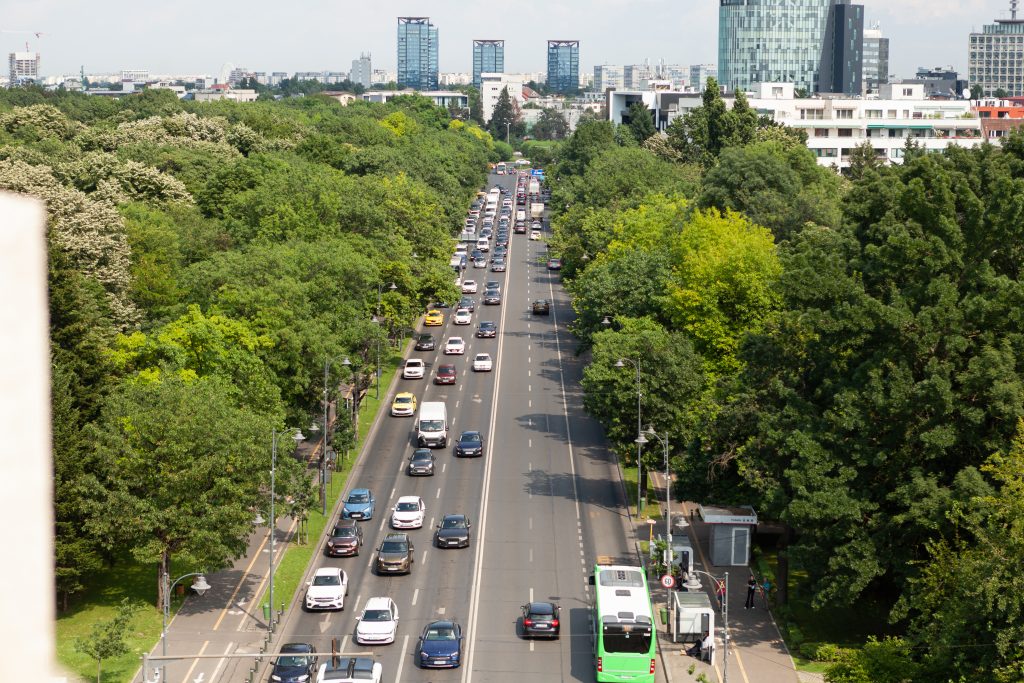
Traffic congestion is one of the main mobility problems in towns and cities. Too many vehicles on certain roads and at particular times can cause queues, longer journey times and disruption to traffic.
Reducing traffic requires a combination of measures: improving public transport, managing access to certain areas, developing alternatives to private cars, using technology to optimise traffic flow and encouraging shared mobility.
What exactly is traffic congestion? Who regulates traffic in towns and cities? What solutions can reduce it? Waiis reviews the main measures that can help reduce the number of vehicles and improve mobility.
What is traffic congestion?
Traffic congestion occurs when the number of vehicles on a road exceeds its capacity to maintain a smooth traffic flow, reducing speeds and increasing journey times.
Although it is often associated with rush hour, congestion can also result from accidents, roadworks, events, traffic restrictions or a high concentration of journeys in certain areas. In cities, congestion can affect everyday mobility, public transport, goods distribution and the quality of the urban environment.
Why does traffic congestion happen?
Traffic congestion can have several causes, which often occur at the same time. Common ones include:
- Journeys concentrated at particular times, especially commuting to and from work.
- Reliance on private cars where there are few transport alternatives.
- Limited road capacity, which can create bottlenecks.
- Accidents, roadworks and incidents that temporarily reduce the space available for traffic.
- Concentrated activity in business, commercial, education or administration areas.
- Lack of mobility alternatives, particularly in certain places and at certain times.
That is why reducing traffic is not just about widening roads. It is also necessary to change how, when and by what means people travel.
Who regulates traffic in towns and cities?
Traffic is regulated by the relevant authority, depending on the type of road. In towns and cities, local councils play a key role in regulating, organising, managing, monitoring and enforcing traffic on urban roads they own, generally through the local police.
Their responsibilities include traffic and parking rules, regulating road use through local bylaws, traffic restrictions, limited-parking zones and environmental measures such as low-emission zones.
However, not every road running through a municipality is managed by the local council. Interurban roads may fall under Spain’s central government or an autonomous community with devolved traffic powers. On these roads, monitoring and enforcement are handled by the relevant authorities and services according to ownership and territory.
What solutions can reduce traffic congestion?
There is no single solution to traffic congestion. Cities and authorities can combine different measures to reduce traffic and provide alternatives to private cars.
Key solutions to traffic congestion include:
- Improving and expanding public transport.
- Introducing low-emission zones and access restrictions.
- Encouraging walking and cycling.
- Using technology to manage traffic.
- Supporting remote work and flexible hours where possible.
- Promoting shared mobility.
- Developing on-demand transport services.
- Improving planning and connections between transport modes.
Combining these measures makes it possible to address congestion from different angles and adapt solutions to each municipality.
Low-emission zones to reduce traffic
Low-emission zones (LEZs) restrict access, circulation and, where applicable, parking for certain vehicles based on their characteristics and, among other criteria, their environmental classification.
Their main aim is to improve air quality and reduce greenhouse gas emissions and other pollutants. Restricting certain vehicles can also change travel patterns and reduce traffic volumes in some areas.
For LEZs to be part of an effective sustainable mobility strategy, alternative ways to travel must be available, including public transport, cycling, walking and collaborative mobility.
Public transport as an alternative to private cars
Efficient public transport can help reduce traffic when it offers a competitive alternative to private cars. Cities can work on areas such as:
- Expanding bus and metro networks.
- Increasing service frequency.
- Creating dedicated public transport lanes.
- Making it easier to connect different lines and transport modes.
- Improving the information available to passengers.
- Supporting intermodality.
The aim is for more journeys to be made without needing a private vehicle.
Cycling and walking
Walking and cycling can be particularly useful for replacing short trips currently made by car. Cities can encourage them by developing connected cycle routes, pedestrian areas, bicycle parking and safe, accessible paths.
These actions are part of a sustainable urban mobility strategy that offers different ways to make each journey as appropriate as possible.
Technology for traffic management
Technology can also help manage traffic and respond to incidents that cause congestion. Tools include:
- Smart traffic lights that adapt their cycles to traffic conditions.
- Variable message signs that report incidents and road conditions.
- Sensors and monitoring systems that show conditions on particular roads.
- Traffic management centres that supervise different areas.
- Real-time information to notify drivers about changes or incidents.
These tools do not eliminate congestion by themselves, but they can help manage traffic more efficiently.
Remote work and flexible schedules
Work patterns can also affect traffic concentration. Where roles allow it, remote work can remove some journeys, while flexible schedules can spread trips over a longer period instead of concentrating them in the same time slots.
Whether these measures are suitable depends on the type of activity, the company’s organisation and each role.
Shared mobility to reduce traffic
Shared mobility covers different options for sharing vehicles or journeys, including carsharing, carpooling or sharing a car, and some on-demand transport services.
Carpooling can help reduce traffic congestion when people with compatible journeys travel together instead of using several vehicles. It can be especially useful for recurring journeys, such as commutes, and in areas or at times when public transport is not a sufficiently competitive alternative.
What role does sustainable urban mobility play?
Sustainable urban mobility aims to make journeys easier while reducing reliance on private cars and encouraging more efficient alternatives. It does not depend on one solution, but combines different ways to travel with planning and management measures, including:
- Public transport.
- Walking and cycling.
- Carsharing.
- On-demand transport.
- Intermodality.
- Intelligent traffic management.
- Access and parking management measures.
Reducing urban traffic congestion therefore means creating a mobility system where people have different ways to make their journeys.
Examples of measures to reduce traffic congestion
Different cities have used measures to manage traffic and reduce the pressure from private cars. London and Stockholm, for example, have introduced congestion charging, charging vehicles to enter certain areas under certain conditions in order to manage traffic demand.
In Spain, cities have introduced low-emission zones (LEZs) and other traffic management measures to support more sustainable mobility. Although LEZs are primarily environmental measures, they can also change travel patterns and traffic volumes in certain areas.
These examples show that there is no single strategy for every city. Measures should reflect a municipality’s size and characteristics, population density, transport network and travel patterns.
Waiis and the role of carpooling in mobility
Carpooling is one alternative that can complement public transport and other traffic-reduction measures. For regular journeys, Waiis lets users set a routine with the origin, destination, days and times. The platform automatically identifies other compatible routines to help people share journeys. This lets carpooling form part of a wider mobility strategy, particularly for recurring trips where several people travel along similar routes.
You may also be interested in
Sustainable commuting alternatives: which should you choose for your journey?
Explore the main sustainable ways to get to work and the benefits each offers. Find out when to choose public transport, cycling, remote working, low-emission vehicles or car-sharing.
How to avoid traffic jams: strategies for a better journey
Traffic jams are common, but planning your departure, checking conditions and knowing alternative routes can help you avoid delays.