

Sustainable mobility in cities is a transport model that aims to reduce polluting emissions, lower dependence on private cars and improve accessibility, safety and quality of life. To achieve this, it combines alternatives such as walking, cycling, public transport and carpooling, together with urban planning that makes everyday journeys easier.
The goal is not just to use less polluting vehicles, but to organize mobility to make better use of resources, reduce traffic and reclaim public space for people. Planning, infrastructure, technology and the involvement of public authorities, companies and citizens are essential to move toward this model.
What are the pillars of sustainable mobility in cities?
The pillars of sustainable urban mobility are active mobility, public transport, intermodality, reducing environmental impact and accessibility. These measures must complement each other to offer practical alternatives that meet the needs of each city and its residents.
- Active mobility: Walking, cycling and using other non-motorized modes of transport on suitable routes. This requires accessible sidewalks, safe crossings and connected cycling networks.
- Efficient public transport: Improving the coverage, frequency, punctuality and accessibility of buses, metro, trams and trains.
- Intermodality: Making it easier to combine different modes of transport in a single journey, with simple connections between stations, stops and other access points.
- Lower environmental impact: Reducing emissions and noise through better journey planning, fleet electrification and alternatives that reduce single-occupancy car trips.
- Accessibility and inclusion: Ensuring that mobility options can be used by people of different ages, abilities and economic circumstances.
- Smart mobility management: Using data and digital tools to plan routes, coordinate services and improve traffic and logistics management.
These pillars must work together. A good public transport network, for example, may be less useful if there are no convenient connections from certain neighborhoods or towns. That’s why solutions must be adapted to how people actually travel.
What challenges does sustainable mobility face in cities?
Sustainable urban mobility faces several challenges related to available space, unequal access to transport and the organization of the movement of people and goods.
Congestion and use of public space
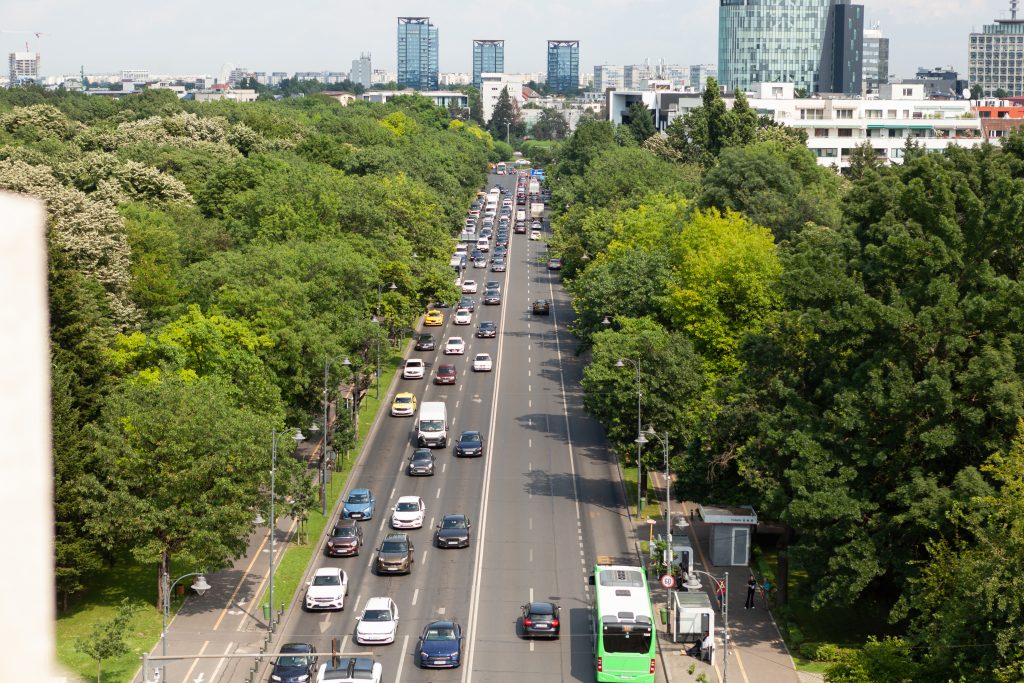
When many people drive to the same places at similar times, congestion and demand for parking increase. Improving alternatives and better organizing journeys can help reduce that pressure.
Unequal connections
The options available are not the same in every neighborhood or at every time of day. Outlying areas and business parks may have limited connections, making it difficult to get to work without your own vehicle.
Urban freight distribution
E-commerce and home deliveries create additional logistics needs. Coordinating routes, reducing failed deliveries and setting up pick-up points can avoid unnecessary trips.
Cost of infrastructure and technology
Expanding public transport, redesigning streets, installing charging points or digitalizing services requires investment and long-term planning.
Accessibility and road safety
Alternatives must be safe and usable by everyone. Infrastructure that doesn’t take into account the needs of people with reduced mobility or those who travel on foot can limit access to certain services.
What solutions drive sustainable mobility in cities?
To move toward more sustainable urban mobility, cities can combine improvements in public transport, infrastructure for active travel, shared services and digital tools.
- Improve public transport connections: Coordinate schedules and make links between neighborhoods, towns and stations easier.
- Create continuous walking and cycling routes: Connect residential areas with workplaces, places of study and everyday services.
- Develop low-emission zones and electrify fleets: Apply measures to reduce pollution and encourage cleaner vehicles, bearing in mind that electrification alone does not eliminate congestion.
- Optimize urban logistics: Plan routes, coordinate deliveries and set up pick-up points to reduce unnecessary trips.
- Harness technology: Use apps and management systems to check alternatives, organize routes and adapt services to demand.
- Encourage carpooling: Make it easier for several people with compatible journeys to travel together, especially on regular trips to workplaces or places of study.
Carpooling can complement public transport when routes and schedules are compatible. Its environmental benefit depends, among other factors, on whether it replaces single-occupancy car trips and whether any additional detours are kept to a minimum.
At WAIIS, we connect drivers and passengers with compatible routes through an automatic matching system. This solution can help organize regular journeys, especially when several people are heading to the same workplace.
What regulations govern sustainable urban mobility in Spain?
In Spain, sustainable urban mobility is framed by various laws and planning tools. The main references include the Sustainable Mobility Act, Law 7/2021 on Climate Change and Energy Transition, and local sustainable mobility plans.
- Law 9/2025 on Sustainable Mobility: Establishes a framework to plan and manage mobility, promote intermodality and more sustainable modes of transport, encourage active mobility and improve inclusion. It also regulates planning instruments for local authorities, large activity centers and commuting.
- Law 7/2021 on Climate Change and Energy Transition: Includes measures related to mobility and low-emission zones, with obligations whose scope depends on the criteria set out in the law.
- Sustainable mobility plan: Makes it possible to analyze travel within an area, establish measures and evaluate their results. Law 9/2025 provides for plans for local authorities and large activity centers, as well as workplace sustainable mobility plans.
How these laws apply depends on factors such as the type of entity, the characteristics of the municipality and the specific requirements of each provision. That’s why it’s advisable to consult the legislation in force and local regulations before attributing a specific obligation to a city.
Which cities stand out for their sustainable mobility initiatives?
There is no single universal ranking of the most sustainable cities, but some Spanish and international cities stand out for specific measures that can serve as a benchmark.
Barcelona: digitalization of urban services. The city has digital initiatives to centralize mobility services and manage operations such as loading and unloading. The SMOU app brings together different services and provides easy access to information related to getting around the city.
Valencia: public space and active mobility. Measures introduced in the city include pedestrianizing spaces, expanding cycling infrastructure and actions aimed at encouraging more sustainable travel. Valencia was European Green Capital in 2024.
Pontevedra: pedestrian priority. This Galician city is an example of transforming urban space to encourage walking, calm traffic and reduce the presence of cars in certain areas.
Paris: infrastructure for walking and cycling. The French capital has introduced measures to expand and improve spaces for pedestrians and cyclists, and also has an extensive public transport network.
Amsterdam: everyday cycling. The Dutch city stands out for its cycling infrastructure and for making the bicycle part of residents’ everyday journeys.
These examples show that sustainable mobility doesn’t depend on a single measure. Each city combines infrastructure, public policies and services adapted to its context. Initiatives that work in a large capital may need adjustments before being applied in a medium-sized city or a less densely populated municipality.
How does WAIIS help achieve sustainable urban mobility?
In cities, many cars head to the same workplaces every morning with empty seats. At WAIIS, we want to use that space to change the way we get around: we automatically connect employees with compatible routes and schedules so they can carpool without having to organize it themselves.
This solution can also help companies move toward more sustainable mobility. With our carpooling app, they can see how their employees travel, identify opportunities to share journeys and access data on emissions and results from a single dashboard.
This way, WAIIS helps turn Workplace Sustainable Mobility Plans (PMST) into concrete measures, tailored to how people actually travel to each site. Because reducing the number of cars arriving at work every day can not only ease access and pressure on parking, it also makes it possible to make better use of the vehicles already on the road.
You might find this interesting

Benefits of carpooling: savings, convenience and environmental benefits
Carpooling can help reduce the cost of your journeys, but its advantages go beyond saving money. This article explores its main benefits—from mobility and the environment to convenience—as well as the drawbacks worth considering.
How to reduce traffic: solutions to road congestion
Traffic congestion affects daily journeys and can increase travel times. Find out which measures can help reduce traffic and improve mobility.